
Bangladesh’s Luther King Tarique Rahman



Tarique Rahman. A name full of emotion for the people of Bangladesh. He spent 17 years in exile, yet in his heart, he cherished his own country—his homeland. That is why, upon stepping onto Bangladeshi soil, he stood barefoot and poured his heart and soul into the moment. He inhaled the scent of the earth and let the soil touch his very being.
From the airport to the reception venue—a journey that should have taken ten minutes—took three hours. He moved forward, touched by the affection of countless people. He carries many dreams for the country and many plans for its people. There had been uncertainty about whether he could return to his homeland, rumors and speculations abounded—but on Christmas Day, all those speculations came to an end. The day was not just Christmas; it was also the auspicious day of Tarique Rahman’s return.
After 17 years in exile, he delivered a 17-minute speech. Tears filled the eyes of millions. The three hundred-foot-wide avenue was awash with emotion. Slogans filled the twelve-kilometer stretch, and surrounding streets were packed with even more people.
Meanwhile, the eyes of 360 million—representing the country’s 180 million citizens—were fixed on Tarique Rahman, some through mobile phones, others on large screens, and many at home watching television. The nation was silently attentive throughout his speech. Tarique Rahman reciprocated this immense love, prioritizing the people over personal matters, even foregoing a visit to see his ailing mother immediately. He came to the people first, offering gratitude for their love.
In his speech, he spoke of peace, calling for a safe Bangladesh where everyone—women, men, and children—can leave home safely and return safely, Insha’Allah. He repeatedly invoked the Almighty’s blessings, showing reverence and humility. He remembered the sacrifices of 1971, when millions of martyrs gave their lives for the country’s liberation. He also honored the struggles of 2024, when students and citizens, irrespective of class or creed, stood to protect freedom and sovereignty. He recalled the 1975 uprising and the resistance against autocracy in the 1990s, giving credit to the hardworking people of the country.
Rahman urged unity, emphasizing that if everyone pledges together, the aspirations of the people can be fulfilled, Insha’Allah. Without naming anyone, he highlighted the victims of enforced disappearances and killings over the past fifteen years, including the recent martyrdom of Shafiqul Osman Hadi, whom he remembered with prayers for his soul.
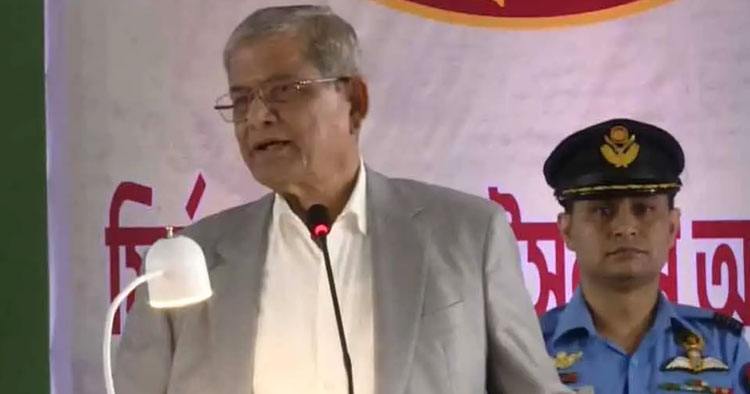
He declared, “Today, alongside me on this stage are leaders from multiple national parties. Whether on this stage or elsewhere, together we will lead this country and build the Bangladesh that the people aspire to. In the face of any provocation, we must remain calm and peaceful. We want peace in Bangladesh, we want peace in Bangladesh, we want peace in Bangladesh.”
As a member of the Bangladesh Nationalist Party, he added, “I have a plan for the people of my country, for my country. This plan is for the citizens, for the development of the nation, for changing the destiny of the people.”
Fifty-eight years ago, Martin Luther King stood in Washington, saying: “I have a dream that this nation will one day rise up… that we hold these truths to be self-evident, that all men are created equal.” On Thursday, in a three-hundred-foot-wide reception area, the people of Bangladesh witnessed their own “Bangladeshi Luther King”—a leader who returned to his homeland after 17 years in exile, carrying the pledge to turn his dreams into reality. He came to see the people with his own eyes and shared his vision of hope and progress.
Source: Manob Zamin via Translation